
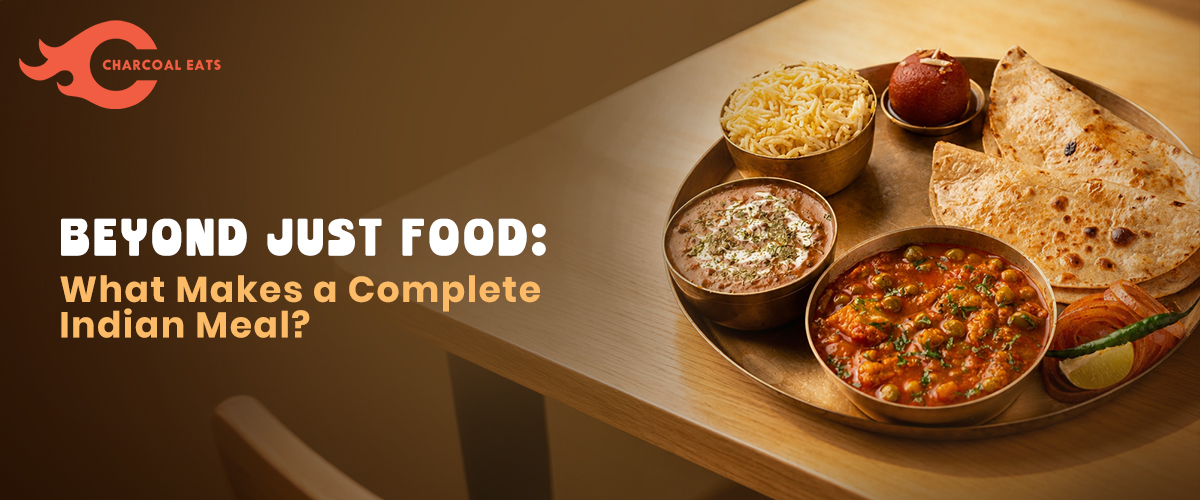
Have you ever noticed how a simple Indian lunch somehow keeps you going for hours?
Not the kind of lunch that comes with fancy labels or superfood claims. Just a regular meal. A bowl of dal, a couple of rotis, sabzi, some rice, maybe a little curd on the side. Nothing extravagant, yet by evening, you’re still not reaching for a packet of chips.
Now compare that with grabbing a burger or a sandwich on a busy weekday. It fills you up in the moment, but before you know it, you’re wandering into the kitchen looking for “something small” to snack on.
That’s the beauty of a complete Indian meal. It isn’t designed to make you feel stuffed. It’s designed to make you feel satisfied. And there is a difference.
It’s Never Been About One Hero Dish
One thing Indian cuisine has always understood is that no single dish can do all the heavy lifting. Rice is comforting, but it needs dal. Rotis become more satisfying with a sabzi. A spicy curry feels incomplete without curd. Even that tiny spoonful of pickle has a role beyond adding heat. Every item on the plate balances another.
That’s why a traditional Indian meal combination feels so complete. Instead of relying on one rich dish, it builds satisfaction through variety. It’s a way of eating that has quietly stood the test of time.
Why Does A Complete Indian Meal Keep You Full For So Long?
People often assume the answer is quantity. It isn’t. The real reason is balance. A balanced Indian meal naturally brings together carbohydrates, protein, fibre and healthy fats without making a big deal about it.
Take a simple plate of rajma chawal. The rice gives you energy. The rajma adds protein and fibre. Add a salad or some onions on the side and you’ve introduced crunch and freshness. A spoonful of curd cools everything down while adding another layer of nutrition.
Nothing feels forced. Yet every element works together. Your body digests these foods more steadily, which means your energy lasts longer and those sudden hunger pangs don’t show up as quickly.
The Secret Ingredient Isn’t a Secret
Scroll through social media and you’ll find endless conversations about protein.
Protein shakes. Protein cookies. Protein bars. The funny thing is, Indian kitchens have quietly been serving protein-rich meals for generations in the form of Dal, Chole, Rajma, Paneer, Chicken, Eggs, Curd.
These weren’t marketed as “high protein.” They were simply everyday food. When paired with rice or rotis, they naturally become more satisfying because protein takes longer to digest and helps you stay fuller for longer. Maybe our grandparents knew something we are only rediscovering today.
Why Variety Matters More Than We Realise
Think about how you actually eat a complete Indian meal. No two bites are exactly the same. One bite might be rice with dal. The next could be roti with sabzi. Then comes a little pickle. Maybe a spoonful of curd. Without realizing it, your palate keeps experiencing something new every few seconds.
That constant change prevents the meal from becoming monotonous. It also slows you down. You spend more time eating, giving your body enough time to recognise when it’s comfortably full instead of overeating in a hurry. It’s a small detail, but it changes the entire experience.
The Traditional Concept of Shad Rasa
One of the most fascinating ideas in Indian food philosophy is Shad Rasa, which refers to the six tastes. These are:
⦁ Sweet
⦁ Sour
⦁ Salty
⦁ Bitter
⦁ Pungent
⦁ Astringent
A complete Indian meal often includes elements of all six tastes. For example, rice provides mild sweetness, pickles add sourness, spices bring pungency, leafy vegetables contribute bitterness, dals offer an astringent quality, and seasoning balances saltiness. This variety creates harmony on the plate and contributes to a greater sense of satisfaction after eating.
Filling Doesn’t Always Mean Heavy
One of the biggest misconceptions about filling Indian food is that it has to leave you feeling sleepy. A good meal shouldn’t do that. It should leave you comfortably full, energised and ready to get back to your day. That’s why portion balance matters as much as ingredient balance.
Too much rice can feel heavy.
Too little protein leaves you hungry.
Too few vegetables and the meal feels incomplete.
Finding that sweet spot is what makes a meal truly satisfying.
Good Food Should Also Fit Into Real Life
As much as we’d all love a freshly cooked homemade lunch every day, life rarely works that way. Meetings run late. Commutes get longer. Deadlines pile up. Cooking from scratch isn’t always an option. But that doesn’t mean you have to settle for random snacks or meals that leave you hungry an hour later. Sometimes, all you need is a meal that’s thoughtfully put together.
That’s exactly what Charcoal Eats’ Mini Meals, starting at just ₹187, are designed for. They bring together familiar flavours, balanced portions, and the comfort of a proper Indian meal without making you compromise on convenience. Whether you’re at work, studying, or simply looking for a dependable lunch option, you can enjoy a wholesome meal without spending a fortune.
The Best Meals Don’t Try Too Hard
A complete Indian meal isn’t about having the biggest portion on your plate. It’s about getting the balance right. When carbohydrates, protein, vegetables, and familiar flavours come together, every bite feels more satisfying, and so does the meal.
And If you’re craving a meal that’s filling, flavourful, and easy on your pocket, explore our Mini Meals and order now to enjoy a satisfying meal delivered straight to your doorstep.
Hungry Yet? We Thought So.

FAQs
What are the key components of a complete Indian meal?
A complete Indian meal typically includes a source of carbohydrates like rice or rotis, protein such as dal, paneer or chicken, vegetables, curd, and accompaniments like salad or pickle. Together, they create a balanced and satisfying meal.
Why does an Indian meal keep you full for so long?
A balanced combination of carbohydrates, protein, fibre and healthy fats slows digestion and provides sustained energy. This helps you stay full for longer and reduces unnecessary snacking.
How do Indian spices help with feeling full and satisfied?
Indian spices add depth, aroma and flavour to meals, making them more enjoyable. Many spices have also traditionally been used to support digestion, contributing to an overall feeling of satisfaction.
What is the concept of "Six Tastes" (Shad Rasa) in Indian food?
Shad Rasa is an Ayurvedic concept that describes six tastes: sweet, sour, salty, bitter, pungent and astringent. Including all six creates a more balanced and satisfying eating experience.
How can I make an Indian meal more filling without adding extra calories?
Focus on adding protein-rich foods like dal, paneer or chicken, include plenty of vegetables for fibre, and pair your meal with curd or salad. This improves satiety without significantly increasing calories.