
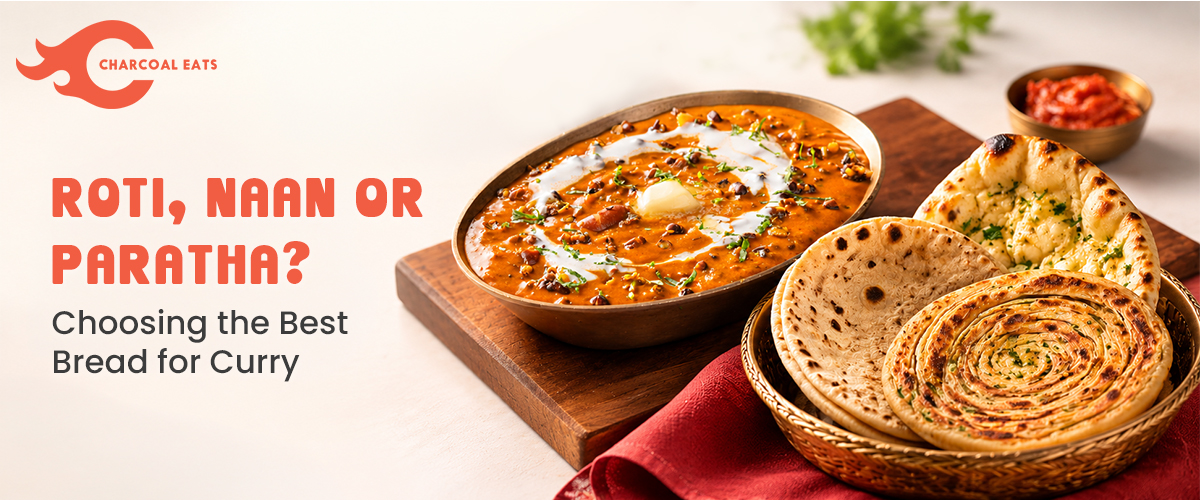
A well-chosen bread changes the character of a curry. Every bite of naan carries a creamy gravy in a soft, generous mouthful. A layered paratha brings texture to a thick masala. Roti offers a quieter accompaniment, leaving the spices and sauce more prominent. Each combination creates a different experience of the same dish.
Choosing the best Indian bread for curry begins with the balance you want: the consistency of the gravy, the richness of the meal and the texture of each mouthful. Personal preference matters, but understanding those differences makes the choice more considered.
Let the curry guide the pairing
The most useful distinction is between a flowing gravy, a thick masala and a relatively dry preparation. Each asks something different about the bread accompanying it.
With a smooth, creamy curry, soft naan is an appealing choice. Its texture allows the bread and sauce to come together easily. A plain roti offers another direction, especially when you want a less elaborate accompaniment to an already rich dish.
For a thick chicken masala or a vegetable preparation with little gravy, consider a layered paratha. Its firmer texture lends itself to gathering the sauce and pieces into one mouthful. The combination is particularly appealing when you enjoy contrast between the bread’s layers and the curry.
These Indian bread pairings leave room for preference, with texture as the starting point.
Understand the differences between Indian breads
The types of Indian breads vary in flour, preparation and texture. Those distinctions are more useful than treating every bread as an interchangeable accompaniment.
Roti and chapati: understated and versatile
Chapati is an unleavened bread cooked on a tava. The MICHELIN Guide’s introduction to Indian breads notes its mild flavour and versatility with gravies. It is a dependable choice when the pleasure of the meal lies in the curry itself, whether that is a familiar dal or a more richly seasoned preparation.
Paratha: layers with substance
Layered paratha introduces a more pronounced texture. MICHELIN describes the folding and layering that produce its flaky character and its ability to accompany thick curries and dry dishes. A stuffed version brings an additional consideration: the filling becomes part of the pairing. When the bread is already generously seasoned, a simpler accompaniment can give its flavour more room.
Naan: a softer accompaniment
Naan is leavened and traditionally cooked in a tandoor. Its soft texture makes it an inviting accompaniment to gravy. Good Food’s naan recipe also demonstrates a pan-cooked version, served warm with curry.
Parotta: a distinct layered option
MICHELIN distinguishes parotta from paratha, describing a commonly maida-based bread with a doughier texture. Consider it when the appeal of layered bread is central to your meal.
Roti or paratha? Consider the whole meal
The choice between roti or paratha often comes down to how much richness and texture you want from the bread itself. Roti makes a restrained accompaniment; layered paratha contributes more noticeably to the character of the meal.
Consider what else is being served. With several rich dishes, plain bread can provide a welcome balance. With one curry as the centre of dinner, a layered bread can make the pairing feel more substantial. If rice is also on the table, factor it into the quantity of bread you order.
For a shared meal, two contrasting breads can be more useful than an extensive selection. A plain option and a layered one allow different preferences without overwhelming the dishes they accompany.
Choosing bread for an everyday meal
For everyday meals, consider how the bread complements the dishes on your plate. Roti makes a versatile accompaniment to dal, vegetables and curries, while a layered paratha adds texture to a simpler spread.
If the curry is already rich, a plain bread can bring balance to the combination. With a dry preparation or a thick masala, the layers of a paratha offer a satisfying contrast. Choose according to your appetite, keeping any rice and other accompaniments in mind.
Make the accompaniment part of the occasion
Choosing bread for Indian curries is a small decision with a noticeable effect on the meal. A familiar roti, soft naan or layered paratha each offers a different way to enjoy the gravy and its seasoning.
For your next meal, explore Charcoal Eats’ food menu and order from Charcoal Eats, checking the selection available at your location.
Hungry Yet? We Thought So.

FAQs
How to choose the right bread?
Consider the curry’s consistency, your preferred texture and the richness of the complete meal. Plain, soft and layered breads each offer a different pairing.
Which is the most healthy bread in India?
There is no universal ranking. Whole-grain breads with modest added fat are reasonable everyday options, with portion size and meal composition also important.
Which bread goes well with chicken curry?
Soft naan suits a creamy gravy, layered paratha complements thick masala, and roti offers a plainer accompaniment. The choice remains a matter of preference.
Which Indian bread is most filling?
Bread size, ingredients, fillings and accompaniments differ. A reliable comparison requires actual portions; the name alone cannot establish which is most filling.
Which Indian bread is best for dinner?
Choose according to the dishes being served and your appetite. Whole-grain roti is an everyday option, while naan or paratha brings a different texture.