
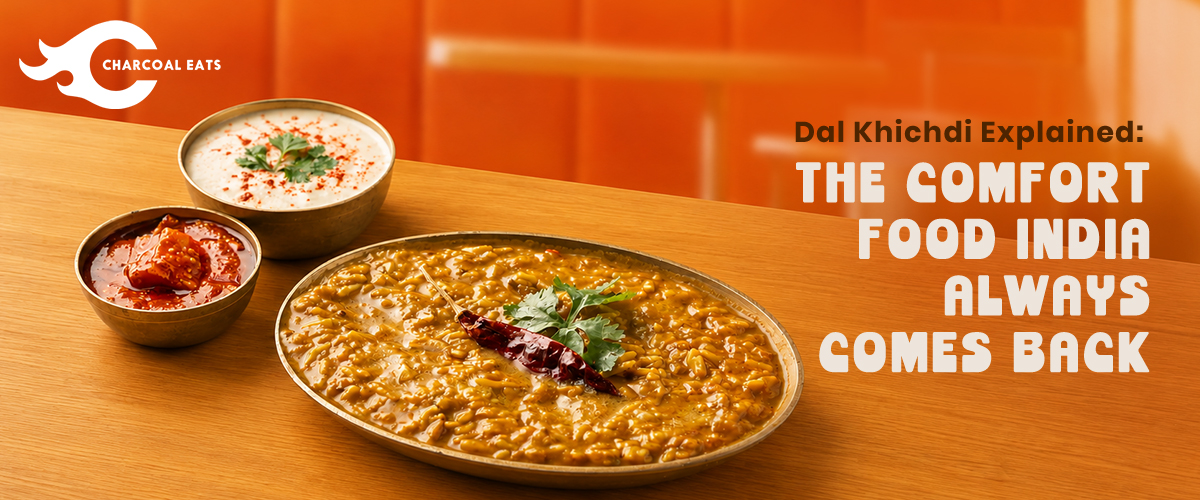
Some meals are made for celebrations. Others are made for the days when you want something warm, familiar, and uncomplicated. Dal khichdi belongs firmly in the second category.
Made primarily with rice and lentils cooked together until soft, it is one of those dishes that almost everyone in India recognizes, even though the recipe can change from one home to another. For anyone wondering what is dal khichdi, the simplest answer is this: it is a one-pot rice-and-lentil meal that turns a handful of everyday ingredients into something deeply comforting.
But its appeal goes beyond simplicity. From quiet weekday dinners to the meal you crave after days of eating out, here is why this humble dish has earned such a permanent place in Indian kitchens.
What Is Dal Khichdi Made Of?
At its most basic, dal khichdi combines rice and dal, usually cooked together with water until they become soft and almost creamy.
Moong dal is a common choice, although different households and regions may use other lentils. Turmeric, cumin, ginger, garlic, green chilies, and salt are often added for flavor. Some versions include vegetables, while others keep things deliberately simple.
Then comes the tadka.
A tempering of ghee or oil with cumin, garlic, chilies, or other spices can completely change the dish’s personality. A fairly plain bowl suddenly becomes fragrant, rich, and much harder to stop eating.
That flexibility is a big part of Indian dal khichdi’s appeal. No single version has to be followed.
Why Is Indian Dal Khichdi Considered Comfort Food?
Ask ten people what Indian comfort food means to them, and you may get ten different answers. Yet khichdi is likely to come up more than once.
Why?
Partly because it is familiar; many people grow up eating some form of it at home, so the dish carries the kind of nostalgia that elaborate restaurant food cannot always recreate.
It is also uncomplicated. There are no complicated layers to work through and no need for a table full of accompaniments. Rice, dal, a little seasoning, perhaps some ghee, and you already have a satisfying meal.
That makes Indian dal khichdi particularly appealing on rainy evenings, after long workdays, or whenever rich, heavy food feels like too much effort.
Sometimes comfort is not about having more on the plate. It is about having exactly enough.
How Does Dal Khichdi Get Its Creamy Texture?
The texture comes from cooking rice and lentils together with enough water for both to soften considerably.
As they cook, the grains begin to break down and blend. The result can range from slightly grainy to almost porridge-like, depending on the amount of water and cooking time.
Some people prefer their khichdi to be relatively thick. Others like it softer and almost spoonable.
That texture is one reason it feels so different from eating dal and rice separately. The two ingredients are not simply served together; they become one dish.
A spoonful of ghee on top can add richness, while a fresh tadka introduces another layer of aroma and flavor.
Different Ways to Enjoy Dal Khichdi
One of the nicest things about khichdi is how easily it adapts.
A simple version can be gently seasoned with turmeric and cumin. A more flavorful version may include onions, tomatoes, garlic, chilies, and a generous tadka.
You can also add vegetables such as carrots, peas, beans, or spinach. In other versions, stronger spices add warmth and character.
Then there are the sides.
Papad adds crunch. Pickle brings acidity and heat. Yogurt or raita adds a cooling contrast. A little ghee adds extra richness.
These additions can turn a straightforward bowl of khichdi into one of those Indian comfort food meals that feels complete without becoming complicated.
Why Simple Indian Comfort Food Still Wins
Food trends come and go, but simple dishes survive because they solve a very real problem: sometimes you want dinner without the drama.
After several meals of biryani, kebabs, rich gravies, or restaurant food, a familiar rice-and-dal preparation can feel surprisingly satisfying.
That does not make it boring.
Good Indian comfort food depends on balance. The rice needs to be cooked properly, the dal should bring body, the seasoning needs enough warmth, and the tadka can provide that final hit of flavor.
Khichdi proves a dish doesn’t need twenty ingredients to leave an impression.
When Should You Choose Dal Khichdi?
There is really no wrong occasion, but certain moments practically call for it.
It works well for a simple lunch, an easy dinner, a rainy-day craving, or the night when you want something comforting after a long day.
It can also be a welcome change when you are tired of choosing between elaborate meals.
That may be the biggest answer to what dal khichdi is beyond its ingredients. It is the food equivalent of keeping things simple when simple feels exactly right.
Explore Comforting Indian Meals With Charcoal Eats
At Charcoal Eats, we know that cravings do not always call for something elaborate. Sometimes you want bold biryanis and smoky kebabs. Other times, you want the familiarity of a comforting bowl that feels easy from the first spoonful.
That is why we make room for different kinds of cravings.
If you want to explore comforting Indian meals, look beyond the idea that comfort food has to be complicated. A warm bowl of dal khichdi, familiar flavors, and a satisfying meal can be more than enough.
Because some days call for a feast, and some days, the simplest food on the menu is exactly the one you want.
FAQs
What is dal khichdi?
Dal khichdi is a simple Indian one-pot meal made by cooking rice and lentils together until soft and comforting. It is usually seasoned with ingredients such as turmeric, cumin, ginger, garlic, or ghee. The dish is popular because it is easy to eat, satisfying, and adaptable to different tastes.
What is dal khichdi made of?
Dal khichdi is mainly made with rice and lentils, often moong dal, cooked together with water and basic spices. Depending on the recipe, it may also include turmeric, cumin, ginger, garlic, green chilies, vegetables, or ghee. A final tadka can add extra aroma, richness, and flavor.
Why is dal khichdi considered an Indian comfort food?
Dal khichdi is considered Indian comfort food because it is warm, familiar, simple, and closely associated with home-style cooking. Its soft texture and gentle flavors make it easy to enjoy after a long day or when richer food feels too heavy. For many people, it also carries a strong sense of nostalgia.
What is the difference between dal khichdi and regular khichdi?
Dal khichdi specifically highlights the combination of lentils and rice, often with a creamy texture and added seasoning or tadka. Regular khichdi can refer more broadly to different regional versions made with rice, grains, lentils, vegetables, or spices. The exact ingredients and consistency can vary widely depending on the recipe.
What is the difference between dal khichdi and dal rice?
The main difference is how they are cooked and served. In dal khichdi, rice and lentils are cooked together in one pot until they blend into a soft, unified dish. With dal rice, the dal and rice are usually prepared separately and served together, giving each component a more distinct texture and flavor.