
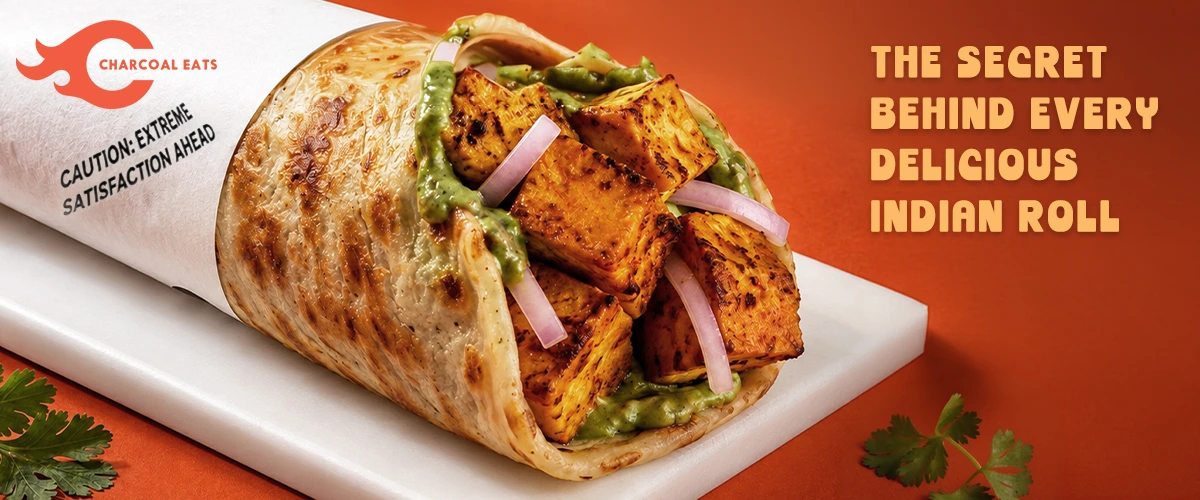
There is something very convenient about a good roll. You get the filling, the bread, the sauces and all the little extras together, so you can pick it up and start eating. No plates, no complicated serving, and no need to figure out which part goes with what. But convenience alone doesn’t make a roll good.
A really satisfying Indian roll needs a filling that has enough substance, seasoning that doesn’t disappear into the background, and a wrap that holds everything together without taking over the meal. When those things come together, even a simple roll can become a proper meal.
What Makes an Indian Roll Filling?
The filling is where most of the meal comes together. A good roll needs more than just one ingredient sitting inside a wrap. The filling should have enough quantity to make the roll satisfying, while also bringing different textures and flavours into every bite.
Protein is often an important part of the equation. Chicken, kebabs, paneer and other ingredients can give the roll more substance and make it feel like a complete meal rather than just a snack.
But protein isn’t the only thing that matters. Onions, vegetables, chutneys, sauces and other accompaniments can add freshness and texture. The combination is what makes filling Indian rolls enjoyable from the first bite to the last.
Flavour Comes From More Than Just the Filling
Indian food is known for its spices, and rolls are no different. The seasoning used on the main filling can completely change the character of a roll. A smoky kebab, for example, brings a very different flavour to the table than a mildly spiced paneer filling. Add a chutney or sauce and you have another layer altogether.
This is where flavourful Indian rolls stand out. The best ones don’t rely on a single strong ingredient. Instead, the flavours work together. There might be heat from spices, freshness from onions or herbs, richness from the filling and a little tang from a chutney or sauce.
You don’t necessarily need a long list of ingredients. You just need the right ones.
Texture Matters More Than You Think
Flavour gets most of the attention, but texture can make or break a roll. Imagine biting into a roll where everything inside has the same soft texture. It may taste fine, but after a few bites, it can start feeling a little flat.
Now add something crisp or fresh. Perhaps some onions, a crunchy vegetable or a lightly toasted wrap. Suddenly, there is more going on.
That’s why good Indian wrap fillings usually work best when there is some contrast. Soft, juicy filling with crisp onions. A tender kebab with a fresh chutney. A warm wrap with a filling that has a little bite to it. Small differences in texture can make the whole roll more enjoyable.
The Wrap Has a Job Too
The wrap isn’t just packaging. It needs to hold the filling together while still being soft enough to bite into easily. If it’s too thick, it can overpower the filling. If it’s too thin or fragile, the whole thing can become difficult to eat.
A good wrap should support what’s inside it. This is particularly important when the filling has sauces or chutneys. Nobody wants to spend their lunch break trying to keep a roll from falling apart. The best rolls make the eating part simple. Pick it up, take a bite and keep going.
Popular Indian Roll Fillings
There are plenty of ways to build an Indian roll, which is part of what makes them so versatile. Chicken is a popular choice, particularly when it is grilled or cooked with spices before being wrapped. Kebabs also work naturally because their smoky, seasoned flavours pair well with chutneys, onions and wraps.
For vegetarians, paneer is an obvious favourite. It has a substantial texture and works with everything from spicy marinades to creamy sauces and fresh vegetables.
Other vegetables, potatoes and different combinations of Indian spices can also create satisfying vegetarian rolls.
The important thing is balance. A good filling should have enough flavour on its own while still working with everything else inside the roll.
Why Indian Rolls Work Well for Office Lunch
Office lunches don’t always give you much time. You might have a meeting in ten minutes or need to get back to your desk quickly. That’s another reason an Indian roll can be a practical choice. It’s easy to carry, doesn’t require much table space and can be eaten without setting up an entire meal.
It also gives you plenty of variety. You can choose a chicken roll when you’re looking for something hearty, a paneer roll when you want a vegetarian option, or try a different filling when you’re in the mood for something new. For a busy workday, having a meal that is both convenient and satisfying can make lunch a little easier.
Is an Indian Roll the Same as a Wrap?
The two terms are often used interchangeably, but there can be a difference in the kind of food they describe.
A wrap is a broad term for food wrapped inside flatbread or another similar outer layer. An Indian roll is more closely associated with Indian flavours and fillings, often using ingredients such as kebabs, paneer, chicken, chutneys, onions and Indian spices.
So, while an Indian roll can technically be considered a type of wrap, the flavour profile and ingredients give it its own identity.
A Good Roll Should Feel Like a Proper Meal
At Charcoal Eats, rolls are made to bring together satisfying fillings, Indian flavours and the convenience of something you can eat on the go. Whether you’re looking for a quick lunch at work or simply don’t want a complicated meal, a well-made roll can fit easily into your day.
And if you’re looking for something a little lighter or want to explore other meal options, you can also check out the Charcoal Eats Mini Meals. When you’re ready for lunch, you can order rolls now and find a roll that fits your craving.
What Makes a Roll Worth Coming Back To?
Ultimately, a great roll doesn’t need to be complicated. It needs a filling that feels generous, flavours that work together, a wrap that holds everything in place and enough variety to keep every bite interesting.
That’s what makes an Indian roll such a useful everyday meal. It’s convenient enough for a busy afternoon, but when the filling and flavours are done right, it doesn’t feel like you’re compromising on the food. Sometimes, all you really need is a good roll, a proper filling and a few minutes to enjoy it.