
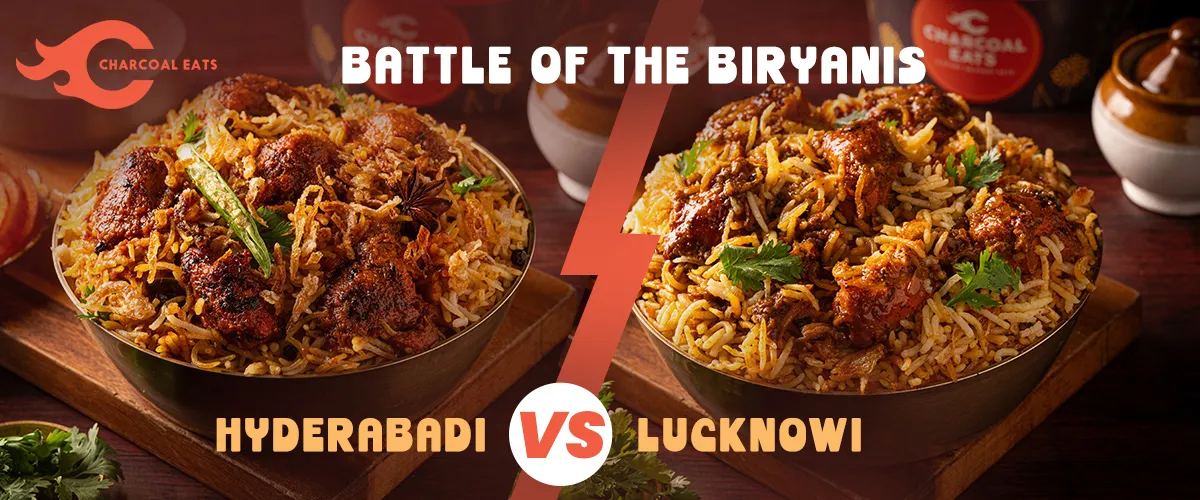
Ask a biryani lover to pick a favourite, and chances are they’ll need a minute. Not because they can’t decide, but because every style of biryani has its own personality. Some are bold and fiery. Others are delicate and fragrant. Some arrive with an unmistakable kick of spice, while others impress you with subtle layers of flavour.
Among all the types of Indian biryani, two names stand out more than most: Hyderabadi and Lucknowi. The debate around Hyderabadi vs Lucknowi biryani has been going on for years, and for good reason. While both are legendary, they’re surprisingly different once you look beyond the rice.
Hyderabadi vs Lucknowi biryani: Two Different Stories
Before we get to the flavours, it’s worth understanding where these biryanis come from.
Hyderabadi Biryani traces its roots to the royal kitchens of the Nizams of Hyderabad. Influenced by Mughlai and local Deccan flavours, it became known for its bold spices, rich aromas, and dramatic cooking style.
Lucknowi Biryani, also known as Awadhi Biryani, comes from the royal kitchens of Lucknow. Here, the emphasis was never on overpowering spice. Instead, the goal was elegance, balance, and refinement.
That difference in philosophy is what shapes the entire Hyderabadi vs Lucknowi biryani experience.
The Biggest Difference Lies in the Cooking Method
If there’s one defining difference between Hyderabadi and Lucknowi biryani, it’s how they’re cooked.
Hyderabadi Biryani traditionally follows the kacchi style. Raw marinated meat is layered with partially cooked rice before everything is sealed together and cooked slowly over low heat. As the meat cooks, its juices flavour every grain of rice, creating a deeply infused biryani.
Lucknowi Biryani usually follows the pakki style. The meat is cooked separately until tender before being layered with rice and finished on dum. This allows every component to retain its own character while blending beautifully during the final cooking stage.
Neither method is better. They’re simply different approaches to creating an unforgettable biryani.
Spice Levels: Bold vs Balanced
One of the first things people notice in the Hyderabadi biryani vs Awadhi biryani debate is the spice.
Hyderabadi Biryani is generally bolder. Green chillies, red chilli powder, fried onions, mint, coriander, and robust spice blends come together to create layers of heat and richness.
Lucknowi Biryani takes a gentler approach. Whole spices like cardamom, cloves, cinnamon, mace, and saffron are used to build aroma rather than intensity. The flavours feel lighter, more fragrant, and incredibly balanced.
If you enjoy spice that announces itself, Hyderabadi is likely your style. If you appreciate subtle complexity, Lucknowi offers a completely different kind of satisfaction.
Texture Matters Too
The contrast isn’t limited to flavour. Hyderabadi Biryani often feels richer and more robust. Every bite carries bold masalas that cling to the rice and meat. Lucknowi Biryani is lighter in appearance and texture. The rice remains beautifully separate, while the meat is incredibly tender thanks to slow cooking and careful preparation.
It’s another reason why conversations around Hyderabadi vs Lucknowi biryani rarely end with a clear winner. Each style delivers something unique.
Two Icons Among the Many Types of Indian Biryani
India’s love for biryani goes well beyond Hyderabad and Lucknow.
- Kolkata Biryani brings potatoes into the picture.
- Malabar Biryani uses short-grain rice and coastal spices.
- Ambur Biryani is known for its distinctive Tamil Nadu flavours.
- Dindigul Biryani has its own tangy, peppery personality.
These diverse types of Indian biryani reflect the country’s incredible regional food culture. Every city adds its own traditions, ingredients, and techniques, creating biryanis that are unmistakably local yet universally loved.
Which One Should You Choose?
The answer depends entirely on what you’re craving. If you’re in the mood for bold spices, rich masalas, and intense flavours, Hyderabadi Biryani is hard to beat. If you’re looking for delicate aromas, refined seasoning, and beautifully tender meat, Lucknowi Biryani deserves your attention.
The best part? You don’t actually have to choose just one. Every biryani has a different story to tell.
Craving Great Biryani? We’ve Got You Covered.
Whether you enjoy bold flavours or prefer a more balanced experience, great biryani always comes down to quality ingredients, careful layering, and patient cooking.
At Charcoal Eats, every biryani is prepared with the same focus on flavour, aroma, and consistency that makes this dish so special. From spice lovers to those who enjoy a more comforting meal, there’s something on the menu for every kind of biryani fan.
Explore our range of Biryanis and Order Biryani online to discover your next favourite bowl.
There Doesn’t Have to Be a Winner
The debate around Hyderabadi vs Lucknowi biryani will probably never end and that’s perfectly fine. Some days call for fiery spices and there are days where you’d crave for something with delicate aromas. The real winner is anyone who gets to enjoy both. When it comes to biryani, having more than one favourite is never a bad thing.
Hungry Yet? We Thought So.

FAQs
What is the main difference between Hyderabadi and Lucknowi Biryani?
Is Hyderabadi Biryani spicier than Lucknowi Biryani?
Yes. Hyderabadi Biryani is typically known for its bold spices and noticeable heat, whereas Lucknowi Biryani focuses on fragrant whole spices and subtle flavours rather than intense spice.
What cooking technique makes Lucknowi Biryani meat so tender?
Lucknowi, or Awadhi, Biryani uses the pakki method, where the meat is slow-cooked separately until tender before being layered with rice and finished on dum. This technique helps create exceptionally soft and flavourful meat.
Does Charcoal Eats offer both spicy and aromatic biryani options on its menu?
Can I order Charcoal Eats Biryanis in single-serve packaging for quick individual meals?
Absolutely. Charcoal Eats offers convenient single-serve biryani portions that are ideal for office lunches, solo meals, or anyone looking to enjoy freshly prepared biryani without ordering for a group.